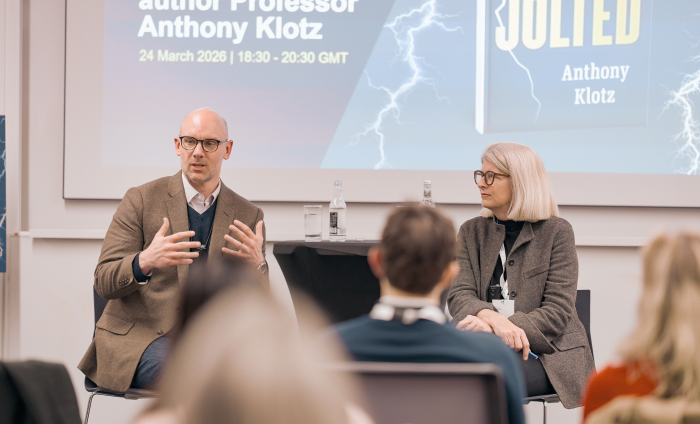
Professor Anthony Klotz in conversation with Pilita Clark from the FT
In a recent article in the Financial Times, columnist Pilita Clark reflects on insights from UCL School of Management Professor Anthony Klotz’s forthcoming book Jolted, which delves into the surprising role that sudden, often unexpected “jolt” events play in triggering resignations.
Clark notes that Klotz’s research challenges the widespread assumption that quitting is mainly the result of long-term dissatisfaction or careful planning.
Jolted tells us that most resignations are sparked by a single incident that pushes an employee over the edge, from negative experiences such as failure or workplace conflict, to major life events like health scares or divorce.
Klotz also points out that positive moments, such as promotions or milestone birthdays, can serve as catalysts for people to re-evaluate their careers and make unexpected exits.
Clark highlights one of the book’s more surprising findings: “honeymoon jolts,” when new hires quickly realise a role isn’t what they were promised. Citing large-scale surveys discussed in Jolted, she notes that a significant share of employees quit within their first year and more than one might expect, with one survey finding 42 per cent quitting within the year.
The FT article also reflects on Klotz’s move to UCL, itself part of the wave of resignations he predicted during the pandemic. His continued research at the School of Management focuses on improving organisational understanding of employee turnover, helping leaders recognise early signs of disengagement and respond before valued staff make the decision to leave.
Clark emphasises one of Klotz’s counterintuitive but evidence-backed insights: after experiencing a “jolt,” the best course of action may be not to quit immediately, but instead to pause, reflect and gather more information. Many careers, she notes, have thrived because individuals chose to stay and navigate change rather than make a rapid exit.
Further coverage for Jolted: BBCR4 The World Tonight (listen from 31:00), Ireland TalkRadio
