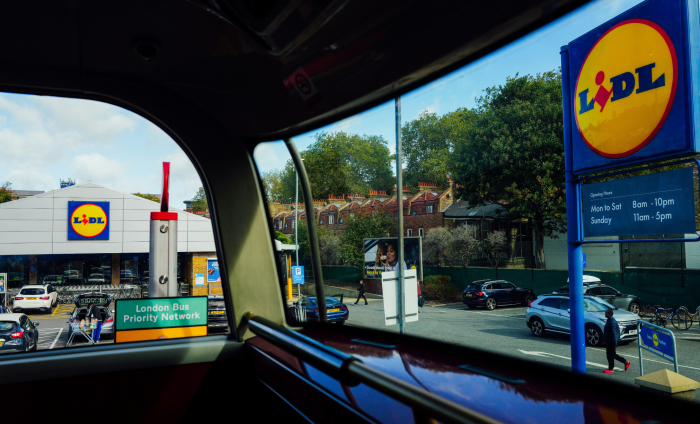
Photo by Adrien Olichon
Associate Professor of Marketing & Analytics, Yiting Deng, provides her expert insight on the news story that supermarket chain Lidl is planning on opening a pub.
The most eye-catching detail in Lidl’s latest expansion announcement is not the £600 million investment, the 50 new stores, or the 2,000 jobs it expects to create. It is the pub.
The retailer revealed plans to open its first pub next to a new store in Dundonald, east Belfast. At first glance, it looks like an unusual move into hospitality. In reality, it is largely the result of Northern Ireland’s licensing rules. Lidl wanted permission to sell alcohol at the store but was unable to satisfy the requirements for a standard off-licence. It could, however, obtain a licence for a pub after two nearby bars had closed. The company has already indicated that the venue is likely to be a one-off rather than the beginning of a chain of Lidl pubs.
Yet the pub is still an interesting story because it highlights how much Lidl’s position in the UK market has changed. For years, discount supermarkets were seen as serving only the most price-conscious shoppers. That perception no longer fits reality. Lidl now operates more than 1,000 stores in Britain, generated £11.7 billion in sales last year, and has drawn level with Morrisons on market share at 8.3%. Its growth reflects a broader shift in consumer attitudes. Shoppers have become more comfortable with own-label products and less concerned about the status attached to brands. Increasingly, getting good value is seen as a smart choice rather than a compromise.
Alcohol provides a particularly clear example. Lidl has built a reputation for offering wine, beer, and spirits at prices well below many branded alternatives. For many consumers, the quality is more than good enough. What once might have been seen as trading down is now simply sensible shopping.
This is what makes the Belfast pub interesting. Lidl is effectively combining affordability and social experience, two things its consumers increasingly value. The retailer already has credibility as a provider of low-cost alcohol, but it also enjoys structural advantages that traditional pubs cannot easily match. Its Dundonald pub will serve Lidl’s own beer, wine, and spirits, creating a vertically integrated model that links retail and hospitality. Located next to an existing store, it can benefit from established customer traffic, purchasing power, and supply chains. An independent publican, by contrast, buys stock through wholesalers, bears the full cost of the premises, and depends entirely on the pub’s profitability. Lidl can potentially treat a pub as an extension of its retail offer, whereas a traditional publican has to make the pub work as a standalone business.
Whether the pub itself succeeds is almost beside the point. The real significance lies in what it says about consumer expectations. People increasingly expect decent quality at the lowest possible price and businesses that can deliver both continue to gain ground. The first Lidl pub may be the product of a licensing quirk, but it also reflects a retail landscape in which value has become one of the most powerful competitive advantages of all.
